
Finding Burke Residents Through Fairfax Records
Burke has no city clerk or city archive because it is an unincorporated Fairfax County census-designated place. That changes the first move. Property, deeds, permits, elections, court files, local history, and most address questions belong with county or Virginia custodians. A result can show a recorded owner, a legal party, a subscriber, or a registered voter, but those are different roles. The best Burke residents directory search asks one narrow question at a time, then checks a second source before drawing a conclusion.
Use an address when the goal is a parcel or a past household. Use a full name and locality when the goal is one person. A current tax profile can identify the parcel; a recorded deed can establish the transfer; a directory or obituary may supply a dated household clue. No public county source is a complete list of every person at an address.
- Search the Fairfax iCare property system by address, owner, or map number and save the parcel number.
- Compare the situs, owner, and mailing address rather than treating them as the same fact.
- Use the Circuit Court land-record route for a deed or legal-description trail.
- For an older household, consult the Virginia Room’s Burke and regional directory runs.
- When an online index stops, request a copy from the actual custodian or use the Historic Records Center and library access routes.
Burke Resident Records at Fairfax Offices
Fairfax County keeps the main Burke records in separate offices. The Circuit Court’s land-record staff handle recorded instruments and the Historic Records Center preserves older books. The Department of Tax Administration maintains the parcel profile. The Office of Elections administers registration information. The Virginia Room is the practical local-history fallback for directories, newspapers, maps, yearbooks, and a CPAN station. Each office has a different index and a different access rule.
Fairfax Circuit Court Land Records
4110 Chain Bridge Road, Suite 317
Fairfax, VA 22030
703-691-7320, option 3 then 3
Fairfax Department of Tax Administration
Real Estate Division
Fairfax County, Virginia
703-222-8234
Fairfax County Office of Elections
12000 Government Center Parkway, Suite 323
Fairfax, VA 22035
703-222-0776
Burke Addresses Need County Context
A Burke ZIP label is not a municipal boundary. Burke and Burke Centre are separate Census-designated places, while Fairfax County administers their land and local services. A result may also use Springfield, Fairfax Station, or another nearby postal label. Start with the physical address, then validate it through the county’s addressing tools and the USPS lookup before rejecting a record because its city line differs.
Three address identities matter in a Burke search. The situs is the physical parcel address. A tax mailing address is where owner correspondence goes and can be elsewhere. The legal description and PIN identify land in deeds and tax maps, even when a road name or postal label changes. These distinctions prevent an association, manager, or out-of-area owner from being mistaken for a resident.
Burke Property Searches in iCare
Fairfax iCare’s address search is the best current starting point for a Burke parcel. The form separates number, unit, street, and suffix. Fairfax advises leaving off the suffix for broad results, and the street field accepts an asterisk wildcard. iCare also exposes owner-name, map-number, map, and neighborhood-sales paths. It is current data, updated twice weekly, not a statement that a named owner occupies the home.
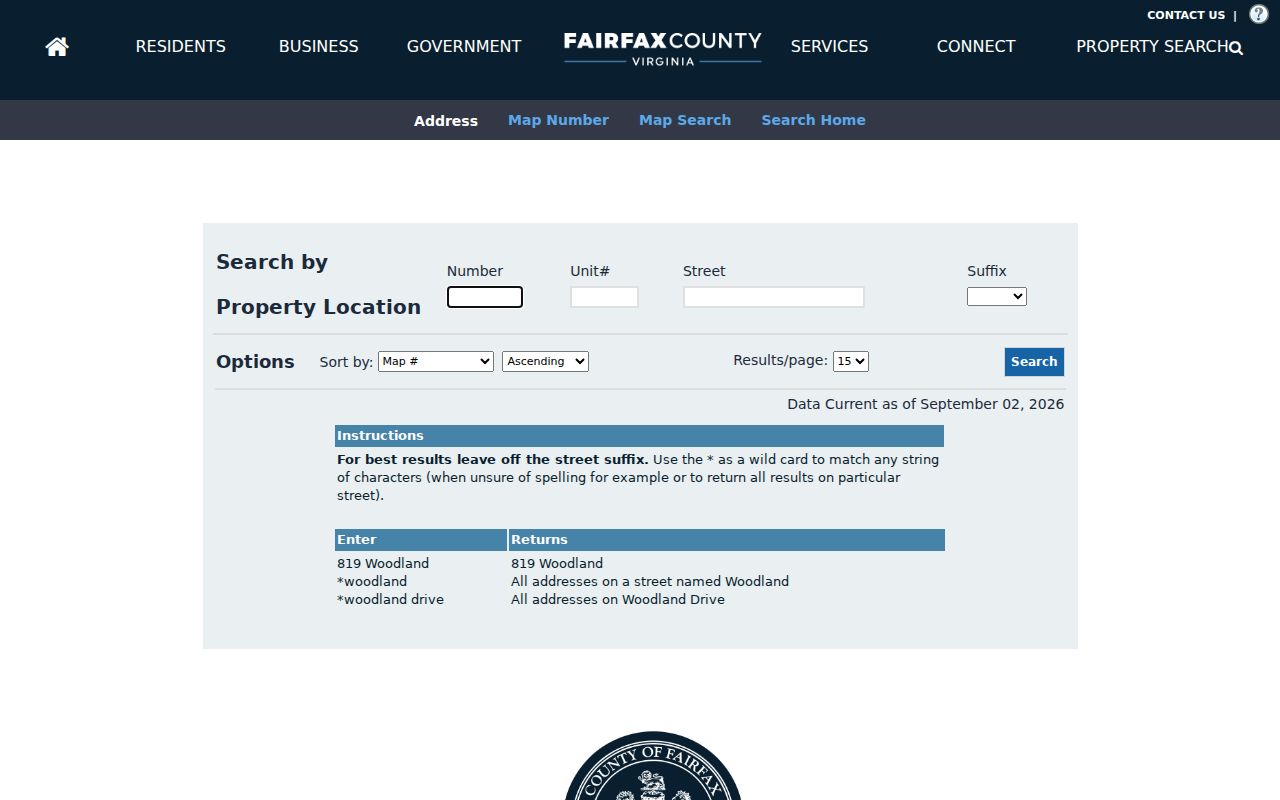
The separate controls make it possible to test a street spelling or unit without losing the parcel trail. Keep the PIN with the result, because it is more stable than a mailing label.
| iCare field | How it works | Useful Burke result |
|---|---|---|
| Number and Unit# | Optional address components | Narrows a multi-unit address |
| Street | Leave suffix off; use * for variants | Broadens a road-name search |
| Suffix | Selectable street type | Refines a known address |
| Map Number | Full or partial PIN accepts wildcard patterns | Bridges the parcel to tax-map research |
| Owner search | Available from iCare help and home | Finds parcels tied to a recorded owner |
Burke Parcel Cards Separate Owners
A parcel report can show owner, owner mailing address, property location, map number, land use, legal description, zoning, utilities, assessed values, and sales or value history. It cannot establish everyone who lives there. Fairfax allows an owner to request withholding of a name from internet display, and a displayed mailing address can belong to a manager, business, trust, or association.
The sample Burke parcel report demonstrates why that separation matters. The card includes the situs, map number, ownership fields, land-use classification, and legal description. Parcel data is a strong anchor for land research, but it is not a household roster.
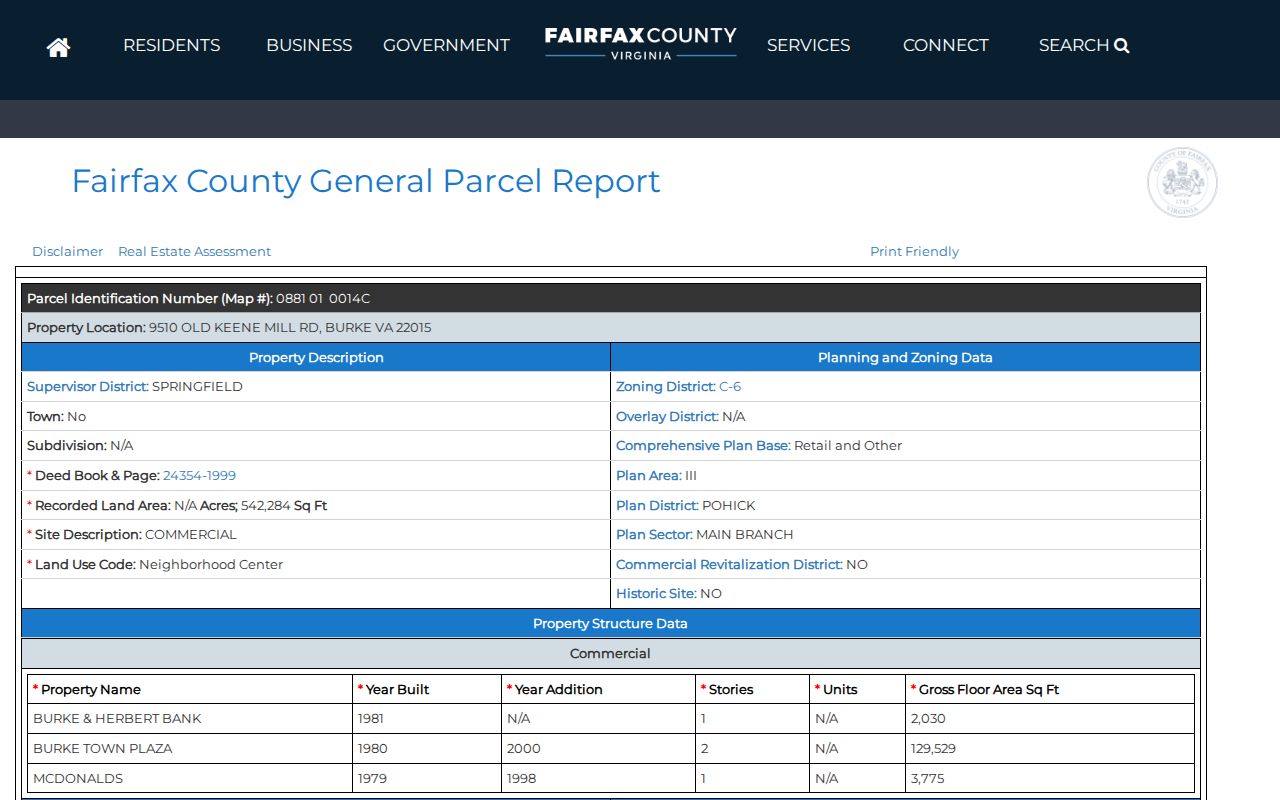
Use the report to record the PIN and legal description before opening a deed or GIS layer. That preserves the trail when a street is renamed or a postal label shifts.
- Parcel
- A defined piece of land in the county tax map, identified by its PIN.
- Roll
- A maintained list or record set, such as the property profile, that serves one limited purpose.
- Index
- A searchable guide to records, not necessarily the document image or a complete case file.
- Criss-cross directory
- A reverse directory arranged by street and number rather than by a person’s name.
Burke Deed Names and Historic Books
Fairfax land records reach from 1742 to the present. The county divides access among the Research Room’s public terminal, subscription CPAN, and the Historic Records Center. Original deed books from 1742 through 1942 are held through the historic route. The electronic data index covers 1980 forward and book 5391 onward, while older index-book images cover 1742 through 1979. A deed links a grantor and grantee to an instrument, date, book or page, and legal description. It does not name every occupant.
Begin with the current owner as grantee, find the purchase instrument, then search the seller as an earlier grantee. Fairfax indexes names as typed. Search spelling variants, initials, DBA, AKA, TA, FKA, and trustee entries marked TR. The Land Records research page explains where the index, images, and original books are available.
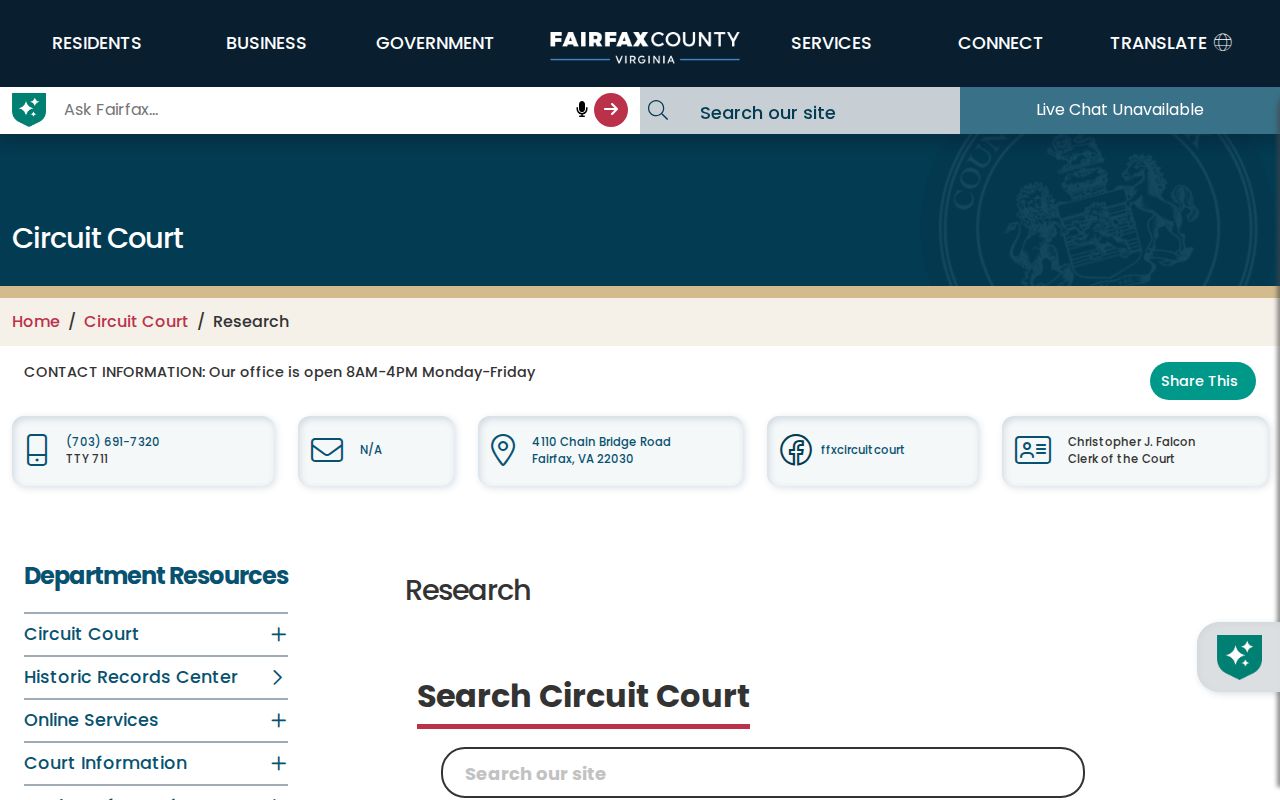
When the needed image is not in the public route, the Research Room, CPAN, or Historic Records Center supplies the documented fallback. A clear book and page is more useful than a guessed address.
Burke Resident Sources Available Today
The current Burke residents directory is a group of source-specific rolls, not one master register. Property records are strongest for a parcel owner. Recorded instruments are strongest for legal parties to a transfer. Elections access is deliberately limited. Association entries identify a group when it voluntarily reports to Fairfax, not every member household. Use the source that matches the question and preserve its access boundary.
| Burke source | Person or address signal | Custodian | Access boundary |
|---|---|---|---|
| iCare property profile | Owner, mailing address, situs, PIN | Fairfax DTA | Free web search; owner display may be withheld |
| Land-record index | Grantor, grantee, instrument trail | Fairfax Circuit Court | Terminal, CPAN, HRC, and copy routes vary |
| Citizen Portal | Matching voter’s own registration information | Virginia Elections | Identity-based self lookup |
| Association list | Voluntarily supplied association details | Fairfax County | Not a public member directory |
| Directory collections | Dated subscribers, households, or local names | Virginia Room | Coverage varies by title and year |
A property result and a directory entry can be compared across a year, but neither should be stretched into a claim about all people at the address. The one-person record sequence belongs on the Burke resident lookup page.
Burke Official Sources Versus Listings
Commercial people-finder services can combine purchased and public data, but their entries may be stale, merged across names, or disconnected from the record that created them. A Burke residents directory search is more reliable when it starts with the official source that owns the field being checked. A property profile answers a parcel question. A Circuit Court index answers a recorded-party question. A historic directory answers what its volume printed in a particular year.
| Source type | Useful for | Key limit |
|---|---|---|
| Official Fairfax or Virginia record | Checking a defined record field with its custodian | May be restricted, incomplete, or limited to one record type |
| Virginia Room directory volume | Documenting a historical subscriber or household snapshot | Coverage, geography, and inclusion vary by title |
| Commercial compiled listing | Generating a question to verify elsewhere | May combine old addresses and name variants without source context |
Use a compiled listing only as a lead, then confirm it with a custodian record or the original directory image. A match in two independent sources is stronger than a familiar name and ZIP code alone.
Burke Voter Records Have Limits
The Virginia Citizen Portal is designed for a person to check that person’s own registration and election information. The workflow requires name, date of birth, last four digits of the Social Security number, locality, and a certification step. It can return a matching voter’s polling place, election district, absentee status, and voting history. It is not a public name-and-address directory for a street or neighborhood.
Virginia’s Citizen Portal is useful when the requester is verifying the requester’s own record. Voter-list products use a separate request form and are restricted to the requester classes and purposes in Va. Code §24.2-405. Residence, mailing address, precinct, and status are not permission to expose protected people or reconstruct a block roster.
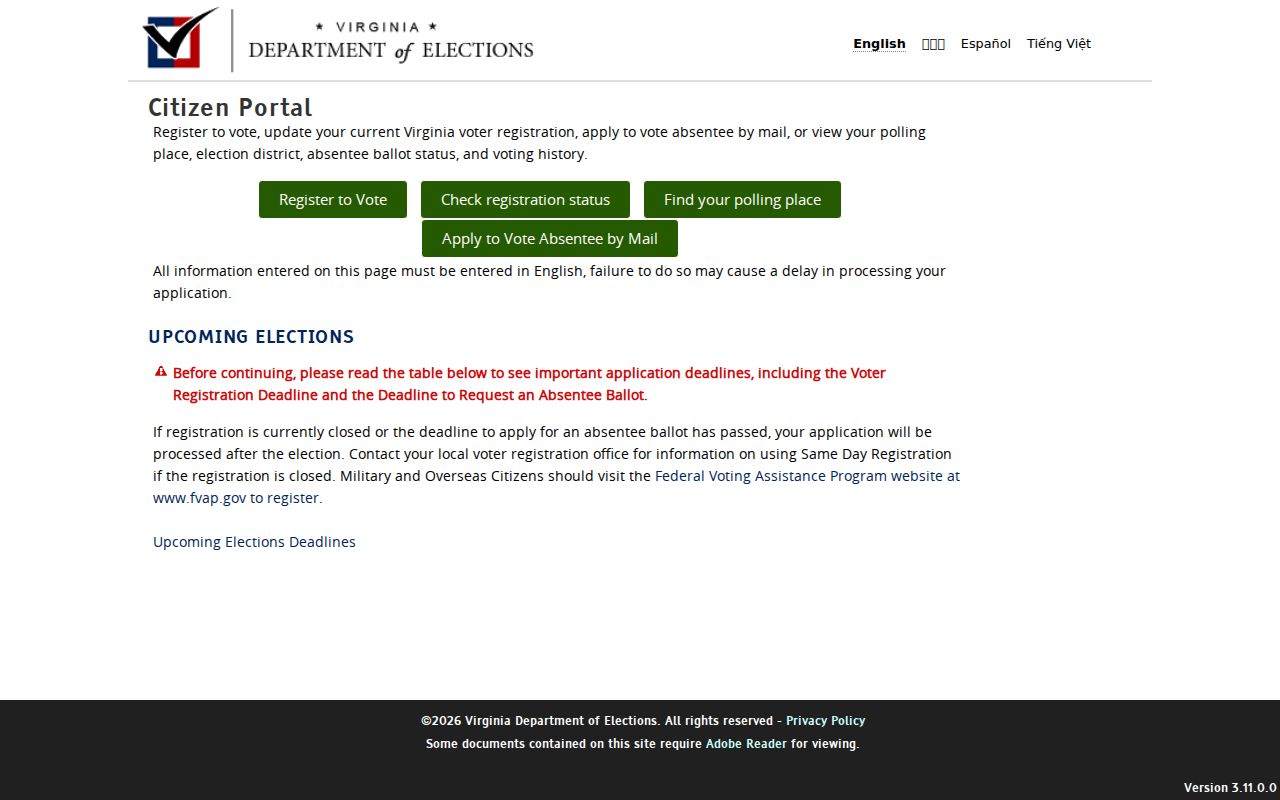
The portal screen is a reminder to choose the official access channel rather than treating a protected registration system as an open resident search.
Burke Court Indexes and Case Copies
Fairfax Circuit eCaseSearch is a free public index for non-confidential civil and criminal records beginning October 18, 2004. Choose civil or criminal, then search by party name or case number. A party search uses a last or company name of at least two letters and may include a first name. Results are limited to 100, sealed matters are absent, and the portal does not provide case documents. A court match is an index lead, not proof of a Burke residence.
eCaseSearch can display case number, filing date, status, plaintiff, defendant, subtype, attorneys, and the register of actions. Record the case number and filing year before seeking a copy from the correct clerk division. CPAN provides a broader county route, including older Legacy access, for documented users and the public terminal supplies an in-person alternative.
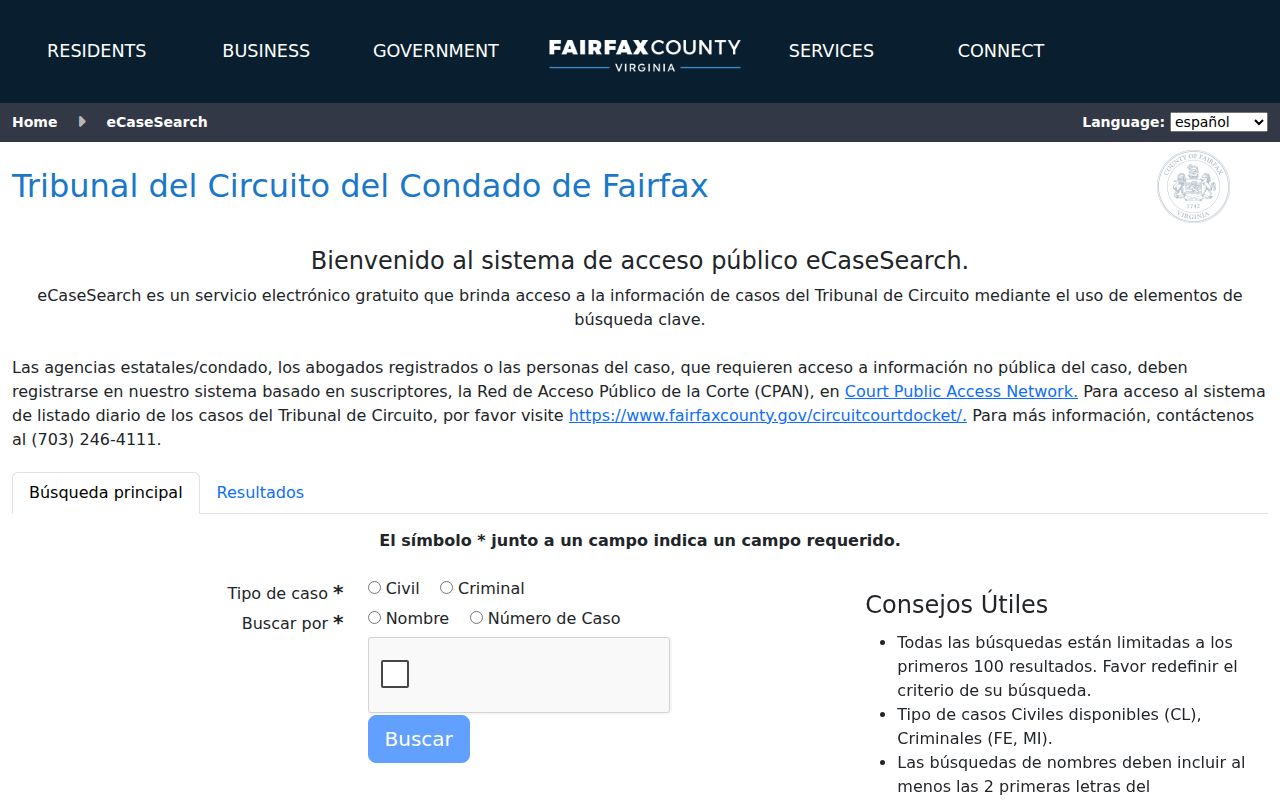
A party name can confirm that a file exists in the public index. It cannot fill a sealed or missing record with a guess.
Burke Vital and License Connections
Vital records are certificates and restricted indexes, not an open name directory. Virginia makes birth records public after 100 years and death, marriage, and divorce records public after 25 years. During the restricted period, the Fairfax Office of Vital Records and the Virginia Department of Health require eligibility and identification. The local office can issue eligible Virginia certificates, while VDH is the statewide custodian and provides online, mail, and walk-in routes.
Fairfax vital-record instructions list the local office process, and the research documents a $15 search or certificate fee. A certified record is not the same as a library reference. For a professional or business affiliation, Virginia’s DPOR, DHP, and SCC systems can supply a license or filing clue. A registered office or license address is an affiliation detail, not an assertion of a private home address.
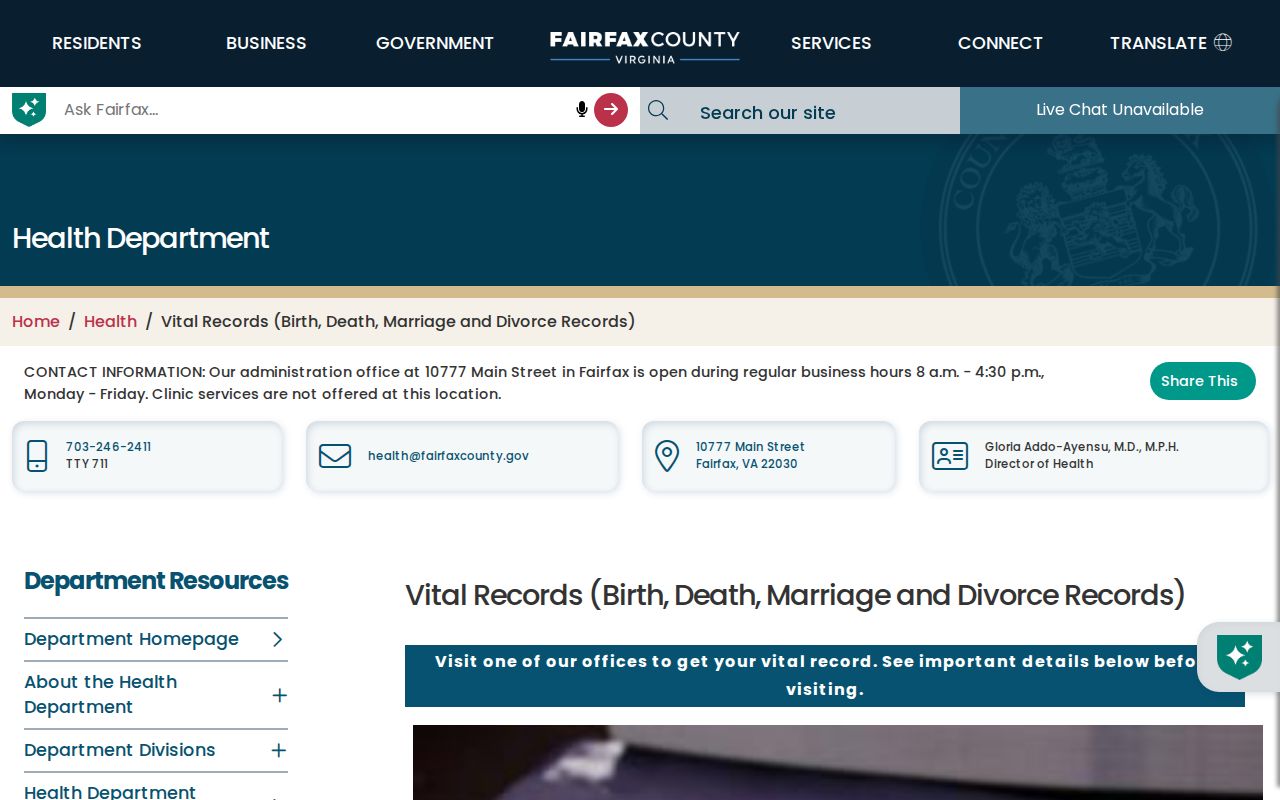
Local vital instructions make the identification and family-eligibility boundary visible before a certificate request is submitted.
The Virginia DPOR License Lookup accepts a search text term and offers advanced search. Its public-data disclaimer is worth reading before relying on a result.
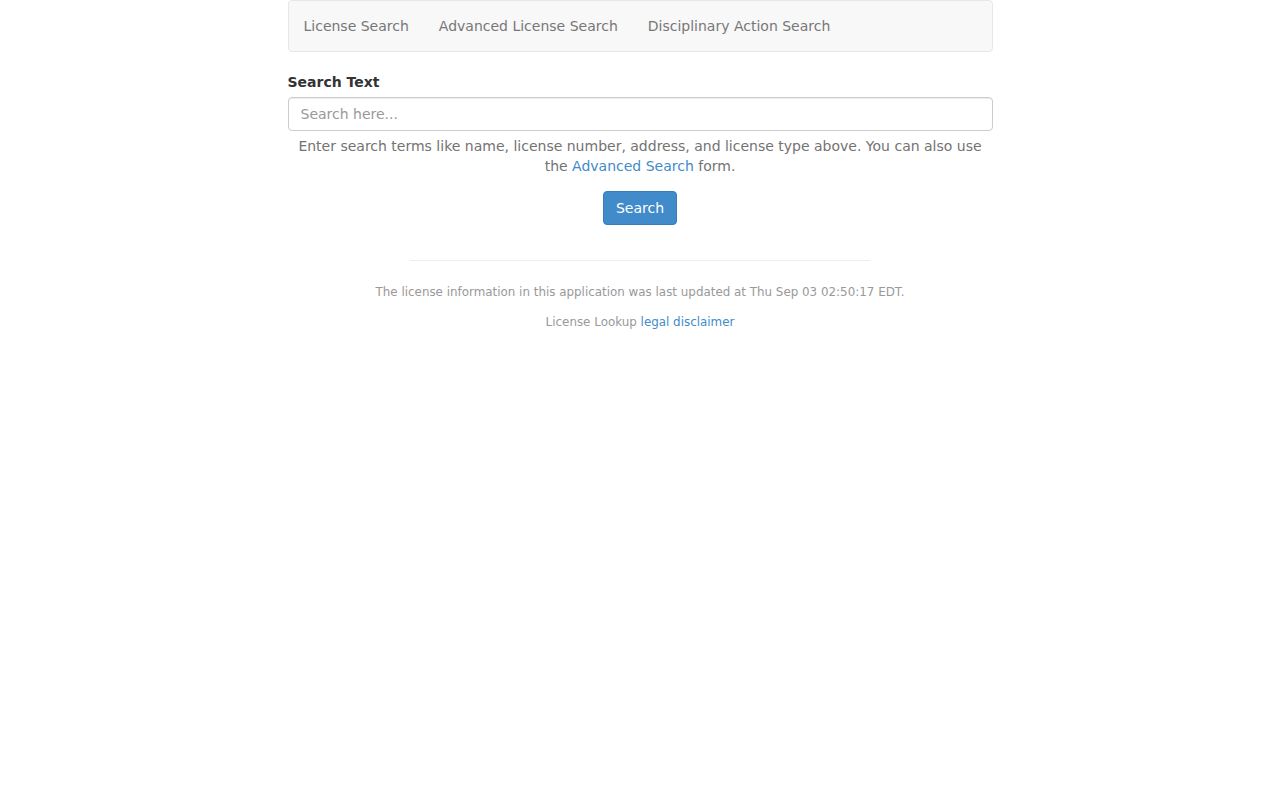
License data can help distinguish similarly named people when combined with an independent county or court record.
Burke ZIP Labels and Map Layers
ZIP codes route mail. They do not define Burke’s Census-designated-place boundary or Fairfax County’s service areas. Burke 22015 is the primary conventional ZIP, while 22009 is a PO-box-oriented routing label. Nearby 22151, 22152, 22153, 22032, and 22039 can arise in edge research, but an exact address still needs USPS and county validation.
Fairfax’s Digital Map Viewer and the county ZIP map help connect a parcel to district and geography layers. Click the parcel itself and compare the PIN, legal description, and situs rather than relying on a broad map polygon alone.
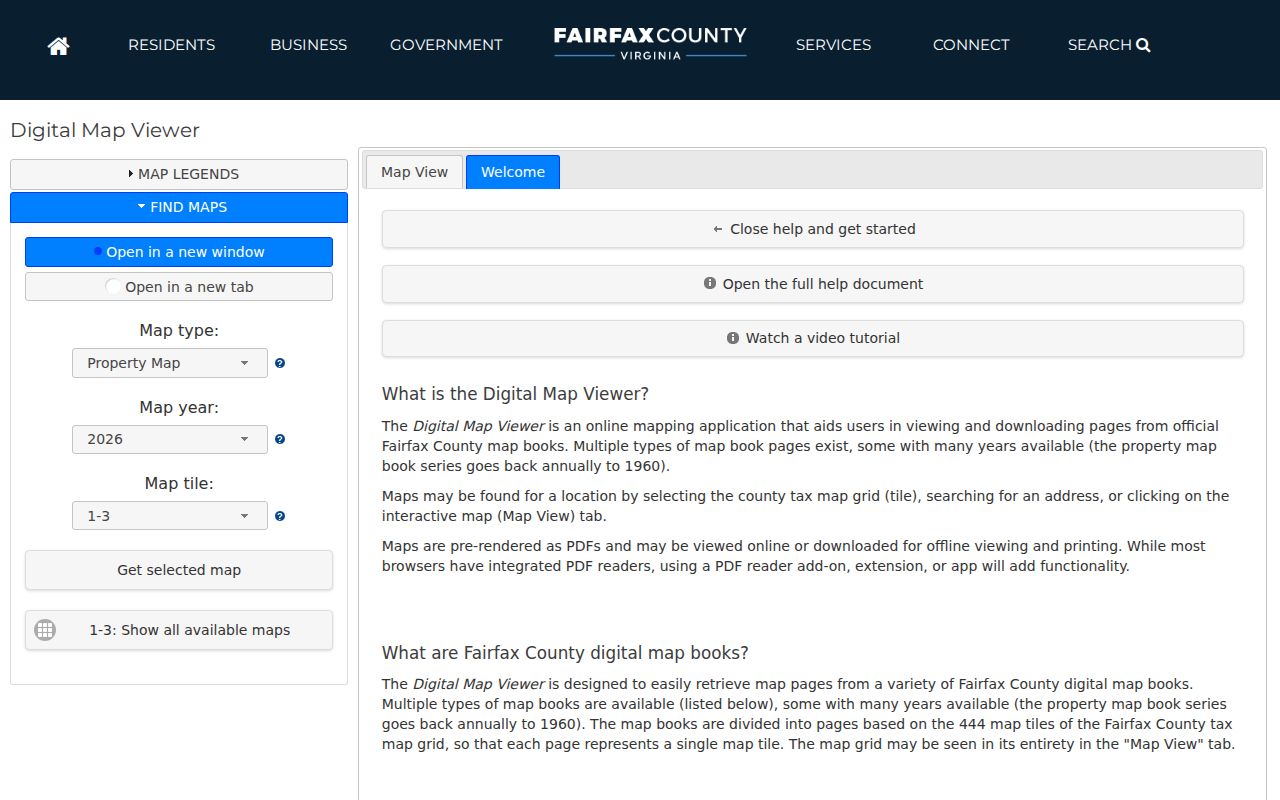
Map layers offer useful context for a known parcel, while the parcel report remains the better source for the recorded land fields.
Burke Historical Resident Directories
The Virginia Room holds the deepest local shelf for a historical Burke residents directory search. Its cataloged holdings include the Burke Community Directory from 1981 through 1995-96 in selected runs, the Burke Centre Resident Directory for 1979, 1981 through 1983, and 1988, and Your Community Phone Book from 2008-09 through 2012-13. Earlier Fairfax gazetteers, regional criss-cross volumes, and telephone books broaden the search when the volume actually includes the street.
Fairfax directory collections identify the title and coverage before a search begins. A printed subscriber or association directory is a period snapshot. It may omit an unlisted household, use a nearby locality label, or cover only part of Burke.
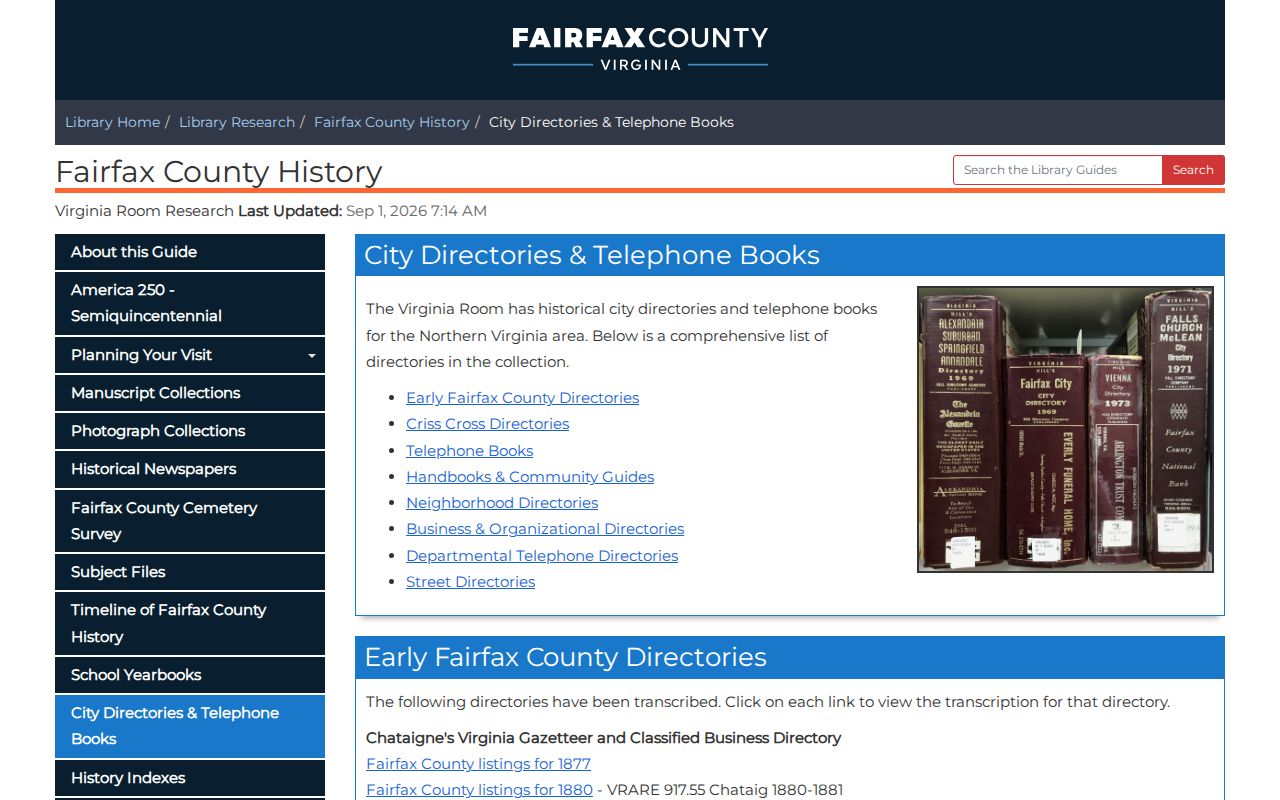
The collection list makes it possible to select a year and geography instead of assuming every Fairfax-area volume indexes every Burke street.
The Virginia Room is on the second floor of City of Fairfax Regional Library and has local newspapers, maps, yearbooks, an eight-station internet area, microform reader/printer, and a CPAN station.
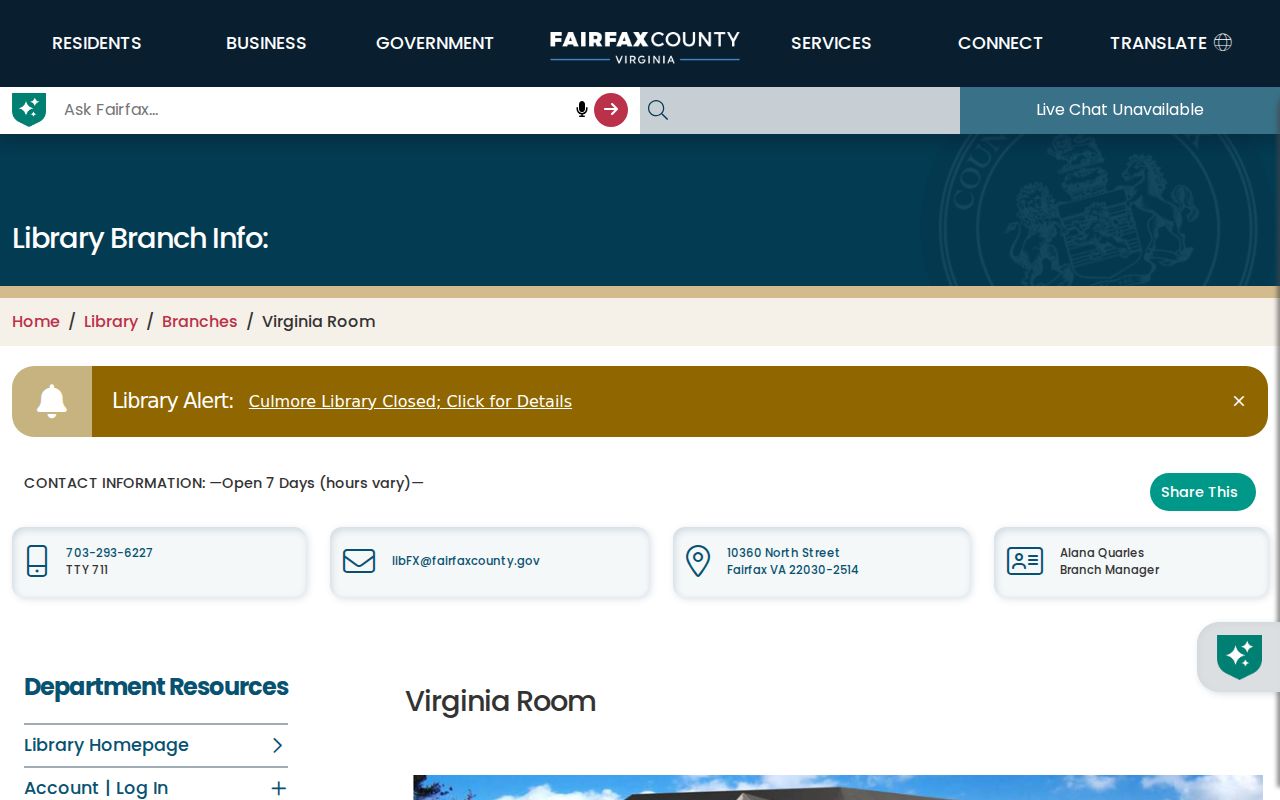
Its on-site tools supply the next step when a digitized catalog entry or web index does not expose the needed page image. The Burke city directory page keeps the collection-by-collection details together.
Burke Station Names Aid Old Searches
Older Burke research benefits from local vocabulary. Burke Station, Burke Lake, Old Burke Lake Road, Fairfax Station, Kings Park, Cherry Run, White Oaks, and Springfield can describe related but different map or directory contexts. Burke Station was named for Silas Burke and the railroad history appears in Fairfax historical material. A 1953 Temporary Dial Telephone Directory is especially useful because it names Burke alongside Centreville, Clifton, Manassas, Pender, and Vienna.
Those terms are search bridges, not proof that every result belongs to the same place or person. Fairfax deed names are indexed as typed, including errors, and Burke is both a locality and a common surname. Add a year, PIN, street, middle initial, or document type to reduce false matches. Note: A missing directory result can reflect coverage, an unlisted subscriber, an initial, or a spelling variation rather than evidence of absence.
Burke Requests Need the Right Custodian
When a public index is incomplete, contact the office that holds the record. Fairfax County’s FOIA office can route county-held records, but it does not substitute for the Circuit Court, sheriff, VDH, schools, or a state agency. Virginia Freedom of Information Act, Va. Code §2.2-3700 et seq., generally requires a response within five working days under §2.2-3704, subject to exemptions and permitted extensions. Fairfax may charge actual costs and may seek a deposit for a larger estimate.
Land-record copies need an instrument number or book and page. Historic material can require the Historic Records Center. A vital certificate requires the documented eligibility path. An association may control its own membership record. These channels preserve both accuracy and privacy.
Lawful use. Burke records support family history, estate research, civic questions, and personal safety awareness. Do not use an address or record trail to stalk, harass, intimidate, or harm anyone.